Vmware

VMware vExpert 2015

The VMware vExpert is a given title from VMware to individuals who have significantly contributed to the community and have spread the message of VMware to customers and partners worldwide. This is nothing you get by passing an exam. It’s given to you by VMware in respect of your work. The vExpert title is something which differates you inside the commnity. Individuals who participate in the program, have access to betas, free licenses, early access briefings, free access to VMworld conference materials online, access to a private community, use of logos etc.

How to shrink thin-provisioned disks

Disk space is rare. I only have about 1 TB of SSD storage in my lab and I don’t like to waste too much of it. My hosts use NFS to connect to my Synology NAS, and even if I use the VAAI-NAS plugin, I use thin-provisioned disks only. Thin-provisioned disks tend to grow over time. If you copy a 1 GB file into a VM and you delete this file immediately, you will find that the VMDK is increased by 1 GB. This is caused by the guest filesystem. It marks the blocks of deleted files as free, even if it only deletes metadata and not the data itself. Later, the data is overwritten with new data, since the blocks are marked as free and the new data is written in there. VMware ESXi doesn’t know that the guest has marked blocks as free. So ESXi can’t shrink the thin-provisioned VMDK.

How to migrate from VMware vCOps to vROps - Part 1

VMware presented the vRealize Operations Manager 6.0 at the VMworld 2014 in Barcelona. In early december, vROps was available for download.

vROps 6.0 is the successor of VMwares IT Operations Management suite vCenter Operations Manager, or vCOps. VMware has aligned the naming scheme with other products, so this release is the first release under the new brand vRealize.

VMware has made some major improvements to this release. One of the biggest advantages is the ability to scale-out. In prior releases you had to deploy multiple vApps to scale. Now you can add additional vROps instances to a cluster. These appliances provide computing resources, as well as redundancy. This allows you to scale beyond the limits of vCOps 5. Redundancy is provided by a concept which is based on master, replica and data nodes. The fist node in a vROps deployment is the master node. By adding a replica node, you can add redundancy for the case that the master node fails. Master and replica node work in a active/ standby relationship. The data nodes are the secret behind the scalability of vROps. A data node has only one task to perform: Collect data based on the assigned adapter.

How to migrate from VMware vCOps to vROps - Part 2

Part 1 of this series has covered a short overview over vRealize Operations Manager 6.0 and the initial deployment of the virtual appliance. Now it’s time to bring it to life.

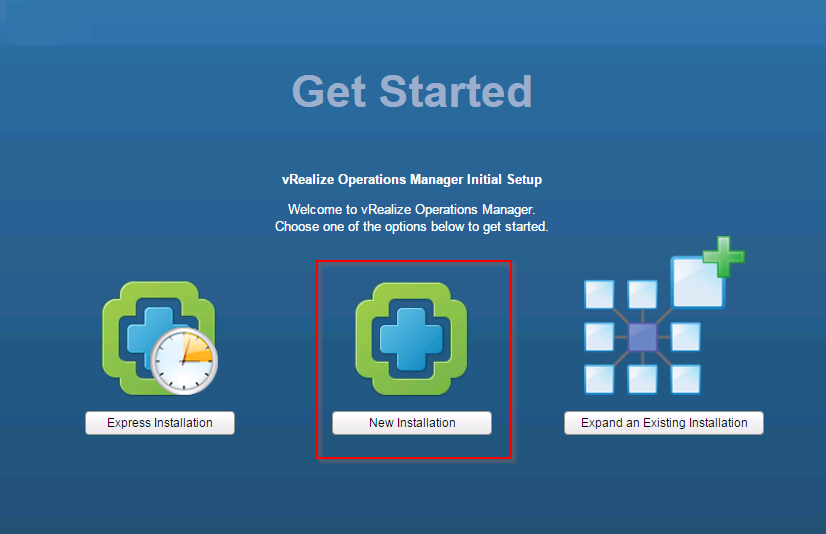
Open a browser and enter the IP of your newly deployed vROps appliance. You will get this nice initial setup screen. “New Installation” is always a good start. Click “New Installation”.

Patrick Terlisten/ vcloudnine.de/ Creative Commons CC0

Patrick Terlisten/ vcloudnine.de/ Creative Commons CC0

How to migrate from VMware vCOps to vROps – Part 3

I wrote about what’s new in vROps 6 and about the deployment of the virtual appliance. I also described how to migrate the data from the old vCOps vApp. Part 3 covers the decommission of the old vApp.

Enter the IP or FQDN of your UI VM into the browser. Login as admin into the administration UI.

Patrick Terlisten/ vcloudnine.de/ Creative Commons CC0

Patrick Terlisten/ vcloudnine.de/ Creative Commons CC0

Before the vApp can be removed, the vCOps needs to be unregistered from the vCenter. Click “Unregister”.

VCP5-DCV Delta recertification exam extended

Originally the VCP5-DCV Delta exam (VCP550D) was available until 30. November. I passed it on 22. November, about one week before the planned ending of availability. Yesterday, VMware announced the extended availability of the delta exam. You can find the announcement on the VMware Education and Certification Blog. The exam will be available through 10. March 2015. Previously requested authorizations are still valid.

This delta exam is focused on the differences between VMware vSphere 5.1 an vSphere 5.5, and it is available to existing VCP5-DCVs who took the VCP510 exam and need to recertify on or before 15. March 2015. The exam consists of 65 questions. You have 75 minutes time to answer them. If you’re a non-native english or japanese speaker, you will granted 30 minutes extra time.

VM deployment fails with "Authenticity of the host's SSL certificate is not verified"

When you want to go fast, go slow. Otherwise you will get into trouble… Today I tried to quickly deploy a VM from a template and customize this VM with a customization specification. The codeword is “quickly”. The fun started with this error message:

Patrick Terlisten/ vcloudnine.de/ Creative Commons CC0

Patrick Terlisten/ vcloudnine.de/ Creative Commons CC0

Fortunately I asked the VMware Knowledge Base, which lead me to VMware KB2086930 (Deploying a template with customization fails with the error: Authenticity of the host’s SSL certificate is not verified). This KB article is all you need to know to fix this error.

Replacing SSL certificates for vRealize Orchestrator Appliance

It’s a common practice to replace self-signed certificates, that are used in several VMware products, with CA signed certificates. I did this in my lab for my vCenter Server Appliance and my VMware Update Manager. While I was working with vRealize Orchestrator I noticed, that it is also using self-signed certificates (what else?). For completeness, I decided to replace the self-signed certificates with CA signed.

My lab environment

  1. VMware vSphere 5.5 environment running a vCenter Server appliance (already using CA signed certificates)
  2. vRealize Orchestrator Appliance 5.5.2 (not version 5.5.2.1,  because I had problems with this release)
  3. Microsoft Windows CA running on a Windows 2012 R2 Standard server

You don’t need a Microsoft Windows CA. You can use any other CA. There is no need to use a special vendor. I use a windows-based CA in my lab, so the screenshots reflect this fact. The way how certificates are replaced differs between vRealize Orchestrator Appliance and the windows-based standalone or vCenter Server embedded version. If you use the in the vCenter Server embedded or Standalone Orchestrator check Derek Seamans VMware vSphere 5.5 SSL Toolkit. I used the Orchestrator appliance.

VCP5-DCV Delta recertification exam

The clock is ticking… Current VCP5-DCVs who need to recertify their VCP can do this until 30. November 2014 by passing the VCP5-DCV Delta exam (VCP550D). The exam can booked online via Pearson VUE and it’s delivered as an online exam. This means, that you don’t have to visit a Pearson VUE test center to take the exam. The costs for the exam are 90,- € plus taxes (in my case ~ 107 €).

Add a new version of HP Agentless Management Service to a customized ESXi 5.5.0 ISO

While preparing for a VMware vSphere 5.5 update at a customer of mine, I stumbled over VMware KB2085618 (ESXi host cannot initiate vMotion or enable services and reports the error: Heap globalCartel-1 already at its maximum size.Cannot expand.). I checked the HP AMS version in the latest HP custom ESXi image and found out, that version hp-ams-esx-550.10.0.0-18.1198610 is included (source). Unfortunately the bug is not fixed in 10.0.0, but it’s fixed in 10.0.1 (source).